A&M Records
A&M Records, founded 1962: jazz artists and albums on the label.
A&M Records, Inc. was an American record label established in 1962 by Herb Alpert and Jerry Moss. It rapidly gained recognition in the music industry, becoming a major independent label until its acquisition by PolyGram in 1989. After this acquisition, A&M continued to operate as a self-managed frontline label within the PolyGram framework. In 1998, PolyGram was acquired by Seagram and subsequently integrated into Universal Music Group. In January 1999, A&M's operations were merged with those of Interscope Records and Geffen Records, leading to the creation of Interscope Geffen A&M Records (now part of the Interscope Capitol Labels Group). Subsequently, A&M became a brand under the larger label group, no longer operating autonomously. In 2007, the A&M brand and trademark were combined with Octone Records to create A&M Octone Records, which remained operational until 2014, when it was absorbed into Interscope.
Read the full article on Wikipedia ↗ · From Wikipedia, the free encyclopedia (CC BY-SA 4.0)
Artists on A&M Records
 Quincy Jones
1933–2024 · American record producer and composer (1933–2024)
 Queen Latifah
b. 1970 · American rapper, singer and actress
 Al Green
b. 1946 · American singer
 Sérgio Mendes
1941–2024 · Brazilian musician (1941–2024)
 Sun Ra
1914–1993 · American jazz composer and bandleader (1914–1993)
 Karen Carpenter
1950–1983 · American singer and drummer (1950–1983)
 Herb Alpert
b. 1935 · American trumpeter and recording industry executive (born…
 Wes Montgomery
1923–1968 · American jazz guitarist (1923–1968)
 Jim Hall
1930–2013 · American jazz guitarist, composer (1930–2013)
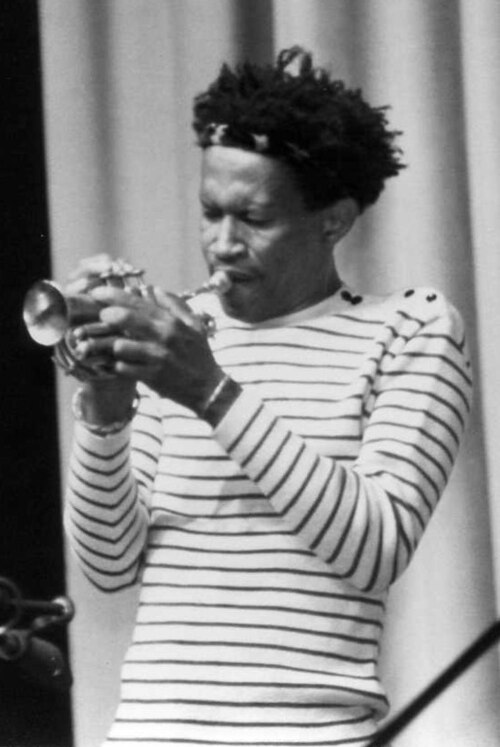 Don Cherry
1936–1995 · American jazz trumpeter (1936–1995)
 Andy Summers
b. 1942 · British guitarist
 Charles Lloyd
b. 1938 · American jazz musician
 Chuck Mangione
1940–2025 · American jazz musician (1940–2025)
 Nat Adderley
1931–2000 · American jazz cornet and trumpet player (1931–2000)
 Richard Carpenter
b. 1946 · American pop musician
Thad Jones
1923–1986 · American jazz trumpeter (1923-1986)
 Gino Vannelli
b. 1952 · Canadian singer, songwriter and jazz musician
 Michel Colombier
1939–2004 · French composer, arranger, and conductor (1939–2004)
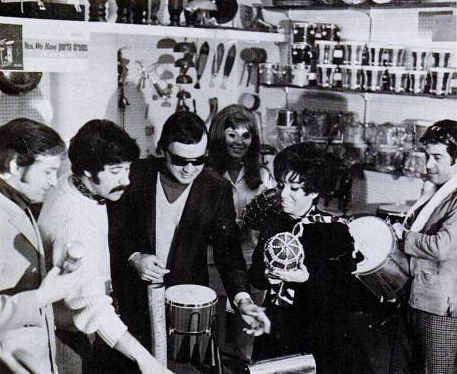 Walter Wanderley
1932–1986 · Brazilian pianist, organist and arranger (1932-1986) of…
 Bernard Purdie
b. 1939 · American R&B, soul and funk drummer
 Paulinho da Costa
b. 1948 · Brazilian musician
Kenny Kirkland
1955–1998 · American musician (1955–1998)
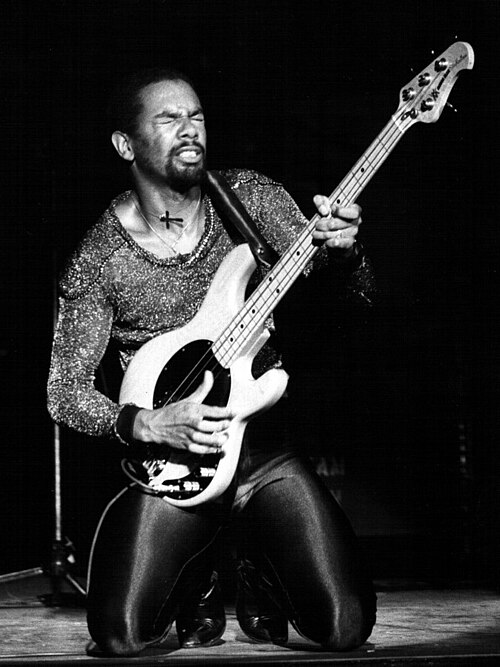 Louis Johnson
1955–2015 · American bass guitarist, songwriter (1955–2015)
Luiz Eça
1936–1992 · Brazilian musician
Label profile
A&M Records () was started in 1962 by partners Herb Alpert and Jerry Moss, hence the A&M (Alpert & Moss).
Their first release (following two singles released under the label name Carnival Records (4)) was "The Lonely Bull" by Herb Alpert & The Tijuana Brass, which sold around 700,000 copies. Sixteen of the first 25 albums were certified gold by the RIAA and helped A&M become a major label and ultimately the world's largest independent record company.
Label code for royalty payments: LC 0485 / LC 00485
One method of identifying pressings is by a single-letter code printed on the center labels:
A = Sonic Recording Products, Inc. (until ca. 1975) or (1975-1980s)
B =
C = (through 1984) or (1985–1986)
R =
W =
X =
Y =
Z =
A&M label history https://www.onamrecords.com/labels/a-m-records/146447/history
European A&M releases started using the PolyGram xxxxxx-x catalogue numbers at the end of 1984. Any release with such a number is after that date.
In Japan, the A&M Records imprint is managed by Universal Sigma and is independent of Interscope.
Some notable events over the years, courtesy of On A&M Records.com:
1967: Started distributing CTI Records in a deal that ran until 1
Profile from Discogs (CC0)
Latest posts
- Evaluating Jazz Syncopation Sources and Rhythmic Analysis
- Instruments of Bossa Nova Essential Tools for the Sound
- Why Is Improv Important in Jazz and How It Defines the Genre
- How to Memorize Jazz Standards Efficiently
- What Is the Most Well-Known Jazz Standard and Why It Wins
- What Does the ø Symbol Mean in Jazz Theory
- Examples of Bebop Jazz and Essential Listening Tracks
- What Is a Basic Drumming Pattern Called and How It Works
- How to Ear Train Effectively for Better Musicianship
- How to Notate a Tritone Substitution in Jazz Charts