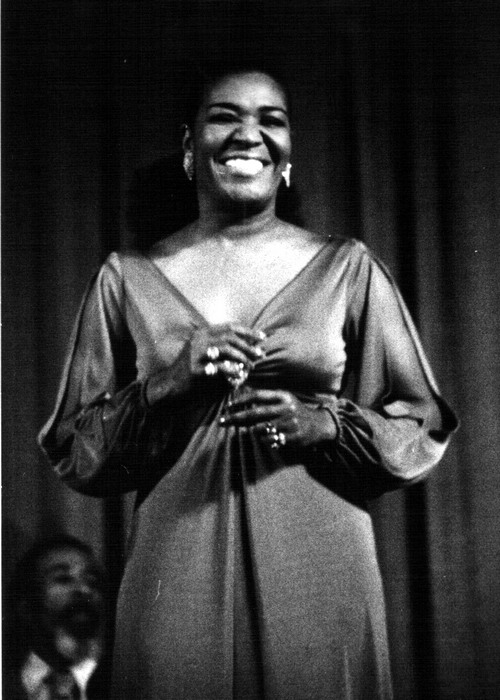
- Born
- 25 August 1941
Fort Gaines - Died
- 20 May 2012
Lillian Booth Actors Home - Country
- United States
- Record labels
- Black & Blue
- Discography
- 4 albums
Biography
Carrie Smith was a jazz musician. Carrie Smith was born on 25 August 1941 in Fort Gaines and died on 20 May 2012 in Lillian Booth Actors Home. The music is usually filed under jazz and swing. Record labels: Black & Blue. The discography here lists 4 albums, from “Harlem on Parade 77” (1977) to “Gospel Time (The Definitive Black & Blue Sessions)” (2008).
Carrie Louise Smith (August 25, 1925 – May 20, 2012) was an American blues and jazz singer. She was not well known in the United States, but had more success in Europe.
Read the full article on Wikipedia ↗ · From Wikipedia, the free encyclopedia (CC BY-SA 4.0)
Discography
Studio and live albums
Also plays on
Albums where Carrie Smith is credited as a sideman
Frequently asked questions
When and where was Carrie Smith born?
Carrie Smith was born 25 August 1941 in Fort Gaines.
What are Carrie Smith's best-known albums?
Albums in our database include Harlem on Parade 77 (1977), Only You Can Do It (1983), Confessin' the Blues (1993) and Gospel Time (The Definitive Black & Blue Sessions) (2008).
External links
Data compiled from open sources; see the source links below. Spotted an error? Let us know.