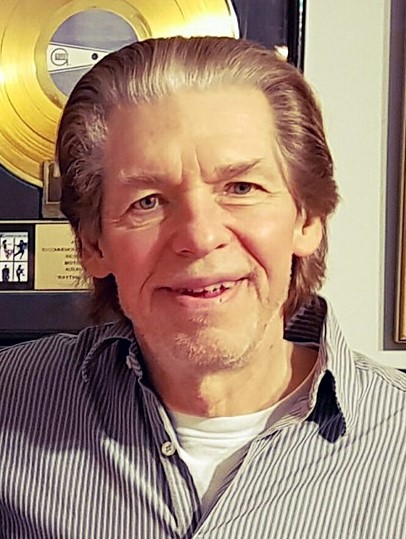
Jay Graydon
Photo: Urs Wiesendanger, CC BY-SA 4.0, via Wikimedia Commons

Guitarists · b. 1949

Jay Graydon

American musician songwriter, recording artist, guitarist, singer, producer, arranger, and record engineer

Born
8 October 1949
Burbank
Country
United States
Discography
8 albums

Biography

Jay Graydon is a jazz musician who plays guitar. Jay Graydon was born on 8 October 1949 in Burbank. The discography here lists 8 albums, from “Airplay for the Planet” (1993) to “Airplay For The Planet - Live In Japan” (2008). Honours include Grammy Award for Best R&B Song (1979).

Jay Joseph Graydon (born October 8, 1949, Burbank, California) is an American songwriter, recording artist, guitarist, singer, keyboardist, producer, arranger, and recording engineer. He is the winner of two Grammy Awards (in the R&B category) with twelve Grammy nominations, among them the title "Producer of the Year" and "Best Engineered Recording". He has mastered many different music styles and genres, and his recordings have been featured on record, film, television and the stage.

Read the full article on Wikipedia ↗ · From Wikipedia, the free encyclopedia (CC BY-SA 4.0)

Discography

Studio and live albums

Also plays on

Albums where Jay Graydon is credited as a sideman

1969 The New Don Ellis Band Goes Underground — Don Ellis guitar, percussion
1972 Connection — Don Ellis guitar
1973 Soaring — Don Ellis bagpipe, guitar
1975 Native Dancer — Wayne Shorter featuring Milton Nascimento guitar, bass guitar
1975 Have You Ever Seen The Rain — Stanley Turrentine guitar
1975 Storm at Sunup — Gino Vannelli guitar
1975 Mind Transplant — Alphonse Mouzon guitar, programming
1976 Everything Must Change — Randy Crawford electric guitar
1976 The Gist of the Gemini — Gino Vannelli electric guitar
1977 Streisand Superman — Barbra Streisand instruments
1977 Aja — Steely Dan guitar
1977 Bundle of Joy — Freddie Hubbard guitar
1977 Captain Fingers — Lee Ritenour guitar
1977 Down Two Then Left — Boz Scaggs guitar
1977 Funk in a Mason Jar — Harvey Mason guitar
1978 Songbird — Barbra Streisand guitar
1978 The Captain's Journey — Lee Ritenour guitar
1978 Everyday Everynight — Flora Purim guitar
1978 Concrete Jungle — David “Fathead” Newman electric guitar
1978 Night Dancing — Joe Farrell guitar
1979 Wet — Barbra Streisand guitar
1979 Extensions — The Manhattan Transfer mix, producer, recording, vocal arranger, arranger, guitar
1979 Groovin' You — Harvey Mason guitar
1979 Blue Desert — Marc Jordan arranger, conductor, engineer, guitar, producer, synthesizer
1980 This Time — Al Jarreau engineer, electric guitar, mix, producer, programming, instrument arranger
1981 Breakin’ Away — Al Jarreau engineer, electric guitar, instrument arranger, mix, producer, programming
1981 Mecca for Moderns — The Manhattan Transfer arranger, electric guitar, synthesizer, mix, producer, instrument arranger
1982 Lite Me Up — Herbie Hancock guitar, producer
1983 Jarreau — Al Jarreau engineer, guitar, instrument arranger, producer, synthesizer
1984 High Crime — Al Jarreau arranger, engineer, guitar, mix, producer, synthesizer

Awards

Frequently asked questions

What instrument does Jay Graydon play?

Jay Graydon is known for playing guitar.

When and where was Jay Graydon born?

Jay Graydon was born 8 October 1949 in Burbank.

What are Jay Graydon's best-known albums?

Albums in our database include Airplay for the Planet (1993), Bebop (2001), Music From the Planet (2002), Past To Present - The 70s (2006) and Airplay For The Planet - Live In Japan (2008).

External links

Data compiled from open sources; see the source links below. Spotted an error? Let us know.

Latest posts

  1. Evaluating Jazz Syncopation Sources and Rhythmic Analysis
  2. Instruments of Bossa Nova Essential Tools for the Sound
  3. Why Is Improv Important in Jazz and How It Defines the Genre
  4. How to Memorize Jazz Standards Efficiently
  5. What Is the Most Well-Known Jazz Standard and Why It Wins
  6. What Does the ø Symbol Mean in Jazz Theory
  7. Examples of Bebop Jazz and Essential Listening Tracks
  8. What Is a Basic Drumming Pattern Called and How It Works
  9. How to Ear Train Effectively for Better Musicianship
  10. How to Notate a Tritone Substitution in Jazz Charts