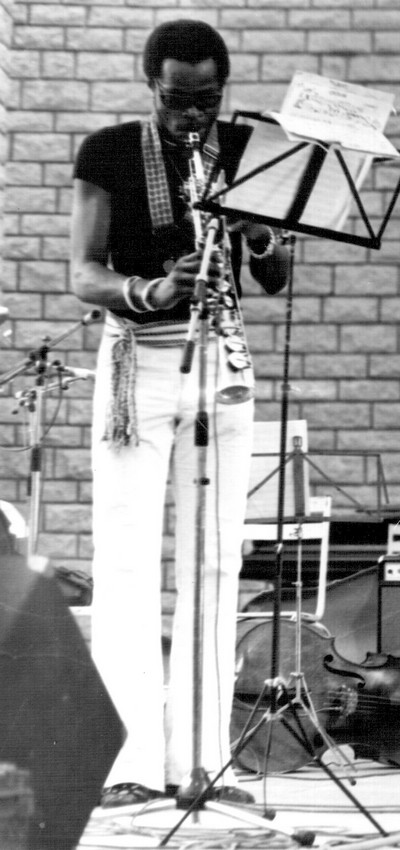
Saxophonists · b. 1943
Steve Potts
American musician
- Born
- 21 January 1943
Columbus - Country
- United States
Biography
Steve Potts is a jazz musician who plays saxophone, drum kit and alto saxophone. Steve Potts was born on 21 January 1943 in Columbus. The music is usually filed under rhythm and blues and free jazz.
Steve Potts (born January 21, 1943, in Columbus, Ohio) is an American jazz saxophonist. Playing mainly alto sax and occasionally soprano, Potts is best known for his 30-year partnership with fellow saxophonist Steve Lacy. A cousin of tenor saxophonist Buddy Tate, Potts studied architecture in Los Angeles and took lessons from saxophonist Charles Lloyd. Afterwards he went to New York where he was student of Eric Dolphy and performed with Roy Ayers, Richard Davis, Joe Henderson, Reggie Workman, and Chico Hamilton. In 1970 he moved to Europe to live in Paris. He performed with Dexter Gordon, Johnny Griffin, Slide Hampton, Mal Waldron, Ben Webster, Hal Singer, Christian Escoudé, Boulou Ferré, and Oliver Johnson. Around 1973 he met Steve Lacy and played in his groups for 30 years. Potts also produced film scores.
Read the full article on Wikipedia ↗ · From Wikipedia, the free encyclopedia (CC BY-SA 4.0)
Frequently asked questions
What instrument does Steve Potts play?
Steve Potts is known for playing saxophone, drum kit and alto saxophone.
When and where was Steve Potts born?
Steve Potts was born 21 January 1943 in Columbus.
External links
Data compiled from open sources; see the source links below. Spotted an error? Let us know.