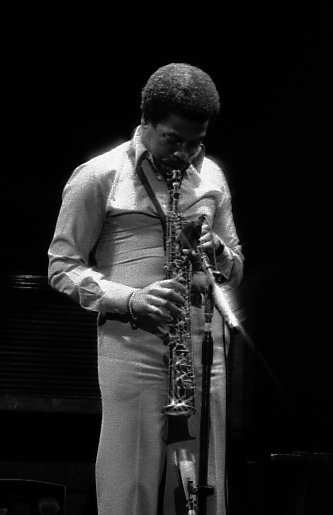
Tenor saxophone solo · 1964
Wayne Shorter: Infant Eyes
- Key
- E♭ major
- Tempo
- 51 BPM SLOW
- Rhythm feel
- Ballad
- Style
- Postbop
- Choruses
- 1
- Form
- A9B9A9
Wayne Shorter's solo on “Infant Eyes” has 157 notes in 127 seconds (1.2 notes per second), spanning 33 semitones from Ab2 to F5. The average tempo is 51 BPM with a ballad feel. About 62% of the melodic motion is stepwise (one or two semitones).
Notes
157Notes
127sSolo length
1.2Notes per second
Ab2–F5Range (33 semitones)
62%Stepwise motion
Pitch-class distribution
C
C♯
D
E♭
E
F
F♯
G
A♭
A
B♭
B
Most frequent intervals
- +2 ×26
- -1 ×26
- +1 ×25
- -2 ×18
- -3 ×17
- 0 ×9
Changes played over
A1
B1
A2
I1
Record
- Record
- The Blue Note Years - The Best of Wayne Shorter · Blue Note · 1988
- Recorded
- 1964-12-24
- Line-up
- Freddie Hubbard (tp); Herbie Hancock (p); Ron Carter (b); Elvin Jones (dr); Wayne Shorter (ts)
- Composer
- Shorter
- Solo length
- 02:35-04:44
Source: Weimar Jazz Database, Jazzomat Research Project (HfM Weimar), ODbL 1.0.