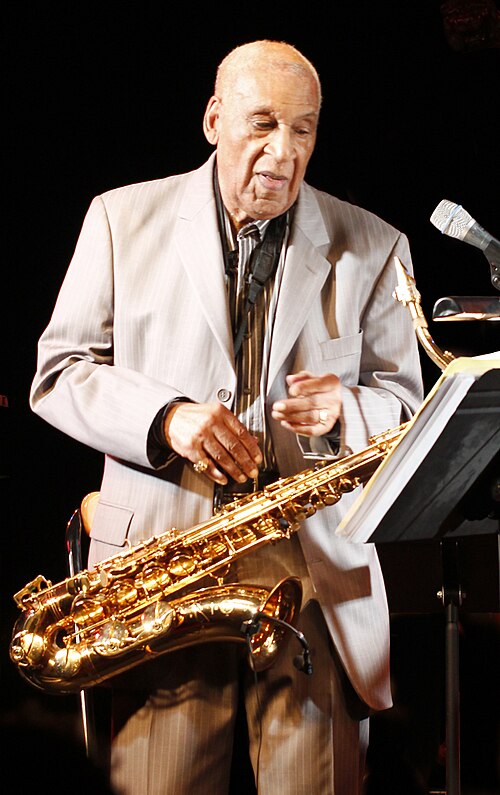
- Nascita
- 8 ottobre 1919
Tulsa - Morte
- 18 agosto 2020
Chatou - Paese
- Stati Uniti
- Attività
- 1939–1990
- Etichette
- Futura et Marge, Black Top Records
- Discografia
- 9 album
Biografia
Hal Singer è stato un musicista jazz (sassofono e violino). Nato il 8 ottobre 1919 a Tulsa, morto il 18 agosto 2020 a Chatou. Lo stile è di solito associato a jazz. Etichette: Futura et Marge e Black Top Records. La discografia qui comprende 9 album, da «Paris Soul Food» (1969) a «Milt and Hal» (2019). Tra i riconoscimenti: cavaliere dell'ordine delle arti e delle lettere (1992).
Discografia
Album in studio e dal vivo
Suona anche in
Album in cui Hal Singer compare come sideman
| 1966 | Kitty White — Kitty White |
| 1975 | Jamming the Blues — Eddie “Cleanhead” Vinson |
| 1976 | Grey's Mood — Al Grey |
| 1981 | Big Blues — Jimmy Witherspoon |
| 1991 | Blues by Lonnie Johnson — Lonnie Johnson |
| 1999 | The Blues Ain't Nothing — Clarence “Gatemouth” Brown |
| 1999 | Mainstream — Vic Dickenson / Joe Thomas |
Premi
Dischi storici a 78 giri
- CORN BREAD HAL SINGER QUINTET · Singer · 1955 archive.org ↗
Domande frequenti
Che strumento suonava Hal Singer?
Hal Singer è noto per sassofono e violino.
Quando e dove è nato Hal Singer?
Hal Singer è nato 8 ottobre 1919 a Tulsa.
Quali sono gli album più noti di Hal Singer?
Nel nostro archivio ci sono, tra gli altri, Paris Soul Food (1969), Blues And News (1971), Soul of Africa (1974), Royal Blue (1991) e Prints in the Sand (1997).
Collegamenti esterni
- en.wikipedia.org ↗
- de.wikipedia.org ↗
- wikidata.org ↗
- musicbrainz.org ↗
- discogs.com ↗
- allmusic.com ↗
- halsingergroup.com ↗
Dati raccolti da fonti aperte; vedi i riferimenti qui sotto. Hai trovato un errore? Scrivici.