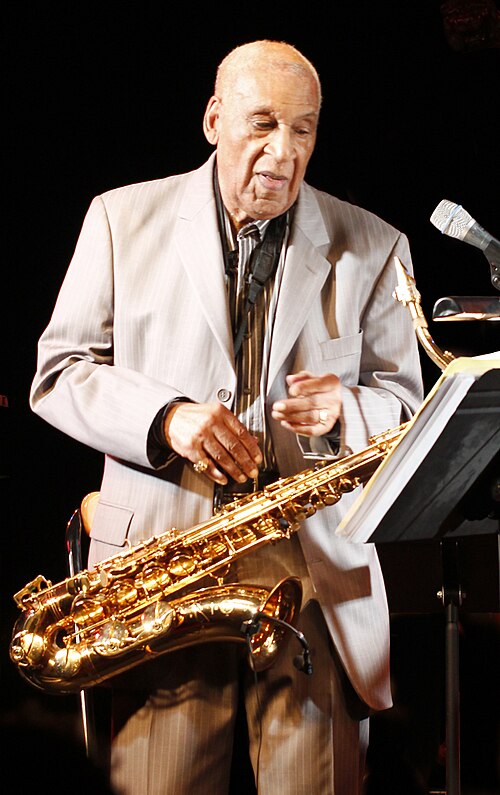
- Born
- 8 October 1919
Tulsa - Died
- 18 August 2020
Chatou - Country
- United States
- Active
- 1939–1990
- Record labels
- Futura et Marge, Black Top Records
- Discography
- 9 albums
Biography
Hal Singer was a jazz musician who played saxophone and violin. Hal Singer was born on 8 October 1919 in Tulsa and died on 18 August 2020 in Chatou. The music is usually filed under jazz. Record labels: Futura et Marge and Black Top Records. The discography here lists 9 albums, from “Paris Soul Food” (1969) to “Milt and Hal” (2019). Honours include Chevalier des Arts et des Lettres (1992).
Harold Joseph Singer (October 8, 1919 – August 18, 2020), also known as Hal "Cornbread" Singer, was an American R&B and jazz bandleader and saxophonist.
Read the full article on Wikipedia ↗ · From Wikipedia, the free encyclopedia (CC BY-SA 4.0)
Discography
Studio and live albums
Also plays on
Albums where Hal Singer is credited as a sideman
| 1966 | Kitty White — Kitty White |
| 1975 | Jamming the Blues — Eddie “Cleanhead” Vinson |
| 1976 | Grey's Mood — Al Grey |
| 1981 | Big Blues — Jimmy Witherspoon |
| 1991 | Blues by Lonnie Johnson — Lonnie Johnson |
| 1999 | The Blues Ain't Nothing — Clarence “Gatemouth” Brown |
| 1999 | Mainstream — Vic Dickenson / Joe Thomas |
Awards
Historic 78 rpm records
- CORN BREAD HAL SINGER QUINTET · Singer · 1955 archive.org ↗
Frequently asked questions
What instrument did Hal Singer play?
Hal Singer is known for playing saxophone and violin.
When and where was Hal Singer born?
Hal Singer was born 8 October 1919 in Tulsa.
What are Hal Singer's best-known albums?
Albums in our database include Paris Soul Food (1969), Blues And News (1971), Soul of Africa (1974), Royal Blue (1991) and Prints in the Sand (1997).
External links
- en.wikipedia.org ↗
- de.wikipedia.org ↗
- wikidata.org ↗
- musicbrainz.org ↗
- discogs.com ↗
- allmusic.com ↗
- halsingergroup.com ↗
Data compiled from open sources; see the source links below. Spotted an error? Let us know.