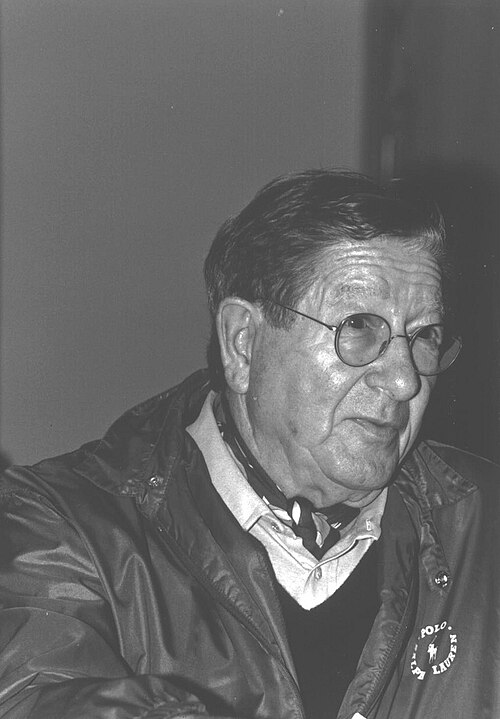
Teo Macero
Foto: Catherine Rankovic, CC BY-SA 2.0, via Wikimedia Commons

Sassofonisti · 1925–2008

Teo Macero

Sassofonista e produttore discografico statunitense

Nascita
30 ottobre 1925
Glens Falls
Morte
19 febbraio 2008
Riverhead
Paese
Stati Uniti
Attività
1953–
Etichette
Columbia Records
Discografia
7 album

Biografia

Teo Macero è stato un musicista jazz (sassofono). Nato il 30 ottobre 1925 a Glens Falls, morto il 19 febbraio 2008 a Riverhead. Lo stile è di solito associato a jazz. Etichette: Columbia Records. La discografia qui comprende 7 album, da «Explorations» (1954) a «Impressions of Miles Davis» (2001). Tra i riconoscimenti: Guggenheim Fellowship (1957).

Attilio Joseph Macero, detto Teo (Glens Falls, 30 ottobre 1925 – Riverhead, 19 febbraio 2008), è stato un sassofonista e produttore discografico statunitense. Produttore per vent'anni alla Columbia Records, Macero è ricordato per aver prodotto l'album di Miles Davis Kind of Blue, che secondo la RIAA è l'album di jazz che ha venduto di più in assoluto, e che, in posizione numero 12, è l'album jazz più accreditato nella lista dei migliori 500 album di tutti i tempi compilata dalla rivista Rolling Stone. Macero produsse inoltre gli album Bitches Brew di Miles Davis e Time Out di Dave Brubeck, rispettivamente il secondo e terzo album jazz nelle classifiche di vendite, dopo il citato Kind of Blue.

Leggi la voce completa su Wikipedia ↗ · Da Wikipedia, l'enciclopedia libera (CC BY-SA 4.0)

Discografia

Album in studio e dal vivo

Suona anche in

Album in cui Teo Macero compare come sideman

1955 Jazzical Moods — Charles Mingus & John LaPorta baritone saxophone, tenor saxophone
1956 Jazz Composers Workshop — Charles Mingus saxophone, tenor saxophone
1957 ’Round About Midnight — Miles Davis arranger
1957 Rooms — Kenyon Hopkins clarinet, tenor saxophone, reeds
1958 Legrand Jazz — Michel Legrand baritone saxophone
1959 Mingus Ah Um — Charles Mingus producer
1959 Time Out — The Dave Brubeck Quartet producer
1960 Blues in Orbit — Duke Ellington liner notes
1960 Mingus Dynasty — Charles Mingus producer
1960 Bernstein Plays Brubeck Plays Bernstein — The Dave Brubeck Quartet, New York Philharmonic, Leonard Bernstein producer
1961 Take Five at Basin Street East — Carmen McRae with Dave Brubeck producer
1962 Sings Lover Man and Other Billie Holiday Classics — Carmen McRae producer
1962 Drumfusion — The New Dynamic Chico Hamilton Quintet producer
1962 Bossa Nova U.S.A. — The Dave Brubeck Quartet producer
1963 Seven Steps to Heaven — Miles Davis producer
1963 Free Fall — Jimmy Giuffre producer
1963 The Dave Brubeck Quartet at Carnegie Hall — The Dave Brubeck Quartet producer
1964 Monk. — Thelonious Monk producer
1964 Big Band and Quartet in Concert — Thelonious Monk producer
1964 Time Changes — The Dave Brubeck Quartet producer
1964 Jazz Impressions of New York — The Dave Brubeck Quartet producer
1965 Solo Monk — Thelonious Monk producer
1965 Woody's Winners — Woody Herman producer
1965 Travellin' Man — Charlie Byrd Trio producer
1965 Angel Eyes — The Dave Brubeck Quartet producer
1966 Time In — Dave Brubeck producer
1966 Brazilian Byrd — Charlie Byrd engineer, producer
1966 Byrdland — Charlie Byrd piano, producer
1966 My Favorite Things — The Dave Brubeck Quartet producer
1967 Sorcerer — Miles Davis producer

Premi

Domande frequenti

Che strumento suonava Teo Macero?

Teo Macero è noto per sassofono.

Quando e dove è nato Teo Macero?

Teo Macero è nato 30 ottobre 1925 a Glens Falls.

Quali sono gli album più noti di Teo Macero?

Nel nostro archivio ci sono, tra gli altri, Explorations (1954), Teo (1957), Betrayal (1977), Fusion (1984) e Acoustical Suspension (1985).

Collegamenti esterni

Dati raccolti da fonti aperte; vedi i riferimenti qui sotto. Hai trovato un errore? Scrivici.

Latest posts

  1. How to Improve Saxophone Skills Through Targeted Practice
  2. The 80/20 Rule in Piano Practice for Faster Results
  3. How to Create Jazz Music A Practical Approach to Crafting
  4. How to Choose Jazz Scales with Practical Examples
  5. What Is a Jazz Lead Sheet and How Do Musicians Use It
  6. Evaluating Jazz Syncopation Sources and Rhythmic Analysis
  7. Instruments of Bossa Nova Essential Tools for the Sound
  8. Why Is Improv Important in Jazz and How It Defines the Genre
  9. How to Memorize Jazz Standards Efficiently
  10. What Is the Most Well-Known Jazz Standard and Why It Wins