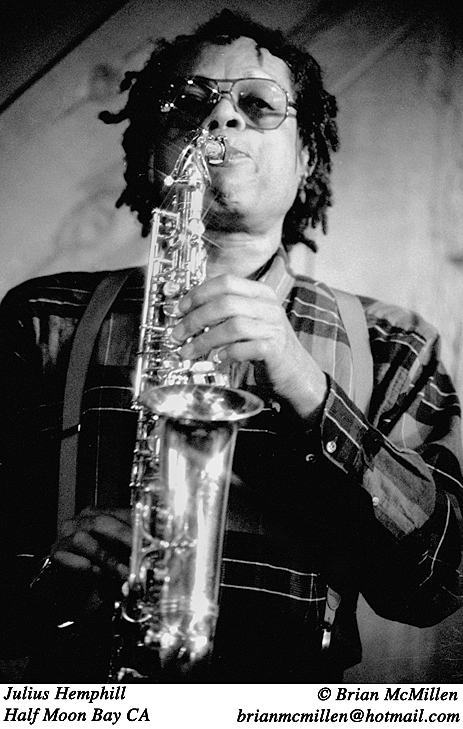
Saxophonists · 1938–1995
Julius Hemphill
American saxophonist (1938-1995)
- Born
- 24 January 1938
Fort Worth - Died
- 2 April 1995
New York City - Country
- United States
- Active
- 1965–
- Record labels
- Elektra, Black Lion Records
- Discography
- 14 albums
Biography
Julius Hemphill was a jazz musician who played saxophone and alto saxophone. Julius Hemphill was born on 24 January 1938 in Fort Worth and died on 2 April 1995 in New York City. The music is usually filed under jazz and Afro-Cuban jazz. Record labels: Elektra and Black Lion Records. The discography here lists 14 albums, from “Dogon A.D.” (1972) to “Live at Kassiopeia” (2011). Honours include Bessie Awards.
Julius Arthur Hemphill (January 24, 1938 – April 2, 1995) was a jazz composer and saxophone player. He performed mainly on alto saxophone, less often on soprano and tenor saxophones and flute.
Read the full article on Wikipedia ↗ · From Wikipedia, the free encyclopedia (CC BY-SA 4.0)
Discography
Studio and live albums
Also plays on
Albums where Julius Hemphill is credited as a sideman
Member of

Awards
Frequently asked questions
What instrument did Julius Hemphill play?
Julius Hemphill is known for playing saxophone and alto saxophone.
When and where was Julius Hemphill born?
Julius Hemphill was born 24 January 1938 in Fort Worth.
What are Julius Hemphill's best-known albums?
Albums in our database include Dogon A.D. (1972), Coon Bid'Ness (1975), Raw Materials and Residuals (1977), Live in New York (1978) and Big Band (1988).
External links
- en.wikipedia.org ↗
- de.wikipedia.org ↗
- it.wikipedia.org ↗
- wikidata.org ↗
- musicbrainz.org ↗
- discogs.com ↗
- allmusic.com ↗
Data compiled from open sources; see the source links below. Spotted an error? Let us know.